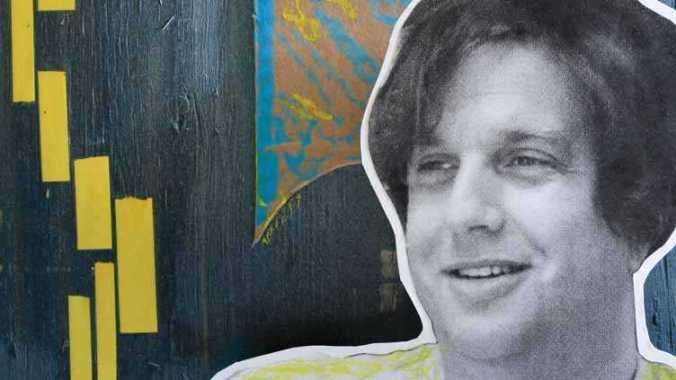
All things considered, it would be so easy for Jonathan Poneman to remain anchored to the past. He is, after all, still the man who formed Sub Pop Records alongside Bruce Pavitt in 1988, helping to forge Pavitt’s independent dream into a commercial reality; still the man who, as part of that team, signed Nirvana. He remains the sum of every part in the cultural thrust that saw alternative rock explode into the mainstream in the early 90s, occupying spaces that it wasn’t supposed to back then. He retains that legacy, without question or compromise.
Continue reading at Clash
 With the release of 2016’s ‘I, Gemini’, Rosa Walton and Jenny Hollingworth opened up several possible futures for themselves. That Let’s Eat Grandma provoked the unusual tag of ‘sludge pop’ was largely indicative of the fact that no one could work them out: were they the new CocoRosie? Gang Gang Dance? Shakespeare’s Sister? All three, somehow?
 As Lucia Fairfull strides off stage, finding her way into the sunniest corner of Brighton Palace Pier, I’m still catching up with what’s just happened inside Horatio’s. Her band LUCIA close their set with ‘Melted Ice Cream’, rounding off a glorious racket that’s caught more attention than you’d expect for an early afternoon slot. Though the single came out last year, it seems destined to live on as a timestamp for 2018, as evocative of its era as anything by Weezer or Best Coast – perhaps the two bands most identifiable in its genetic make-up – immediately recalling a specific time and place in our lives, a history shared by our own experiences as much as the rock hagiographies that stack up around them.
 A renewed sense of an international identity post-Brexit is shining a long-overdue spotlight on the incredible music being made around Europe. You sense that Amsterdam-born songwriter
  I’m sure there are worse offenders. Somewhere, across the unfathomable spread of corporate shindigs and boutique getaways that make up the modern festival scene, there has to be at least one line-up that reeks of IPA and second-hand Bill Hicks biographies more than this one; a metal weekender somewhere in Coventry, perhaps, or Kendal Calling.
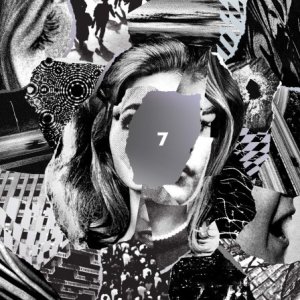 The first time we fall in love, the world feels uncomfortably bright. Everyday life takes on an oversaturated quality, as if the scenes playing out before us were flecked with magentas and blues that don’t quite belong, a vividness distilled into one person. Like a chemical high — which love is, of course — we momentarily drift into a consciousness that we can’t quite contain. It’s a dream performed with eyes wide open.
 The first time Joy Crookes laughs in the video for ‘Power’, it’s a disarming moment. The video, shot entirely in black and white, matches the song’s ele-gance in both purpose and style: classic yet modern, collective yet singular, softly spoken and sharp-tongued all at once. If that’s the case, it’s perhaps be-cause Crookes seeks to celebrate women, to exhibit joy, as much as denigrate those who seek to compromise their integrity. “You came here through a woman,” she sings. “Show some fucking respect.”
 Whatever proximities we care to chart across the star maps of ambient and electronica, both share a light that typically burns in cooler shades. On 2013’s ‘Immunity’, Jon Hopkins supposedly charted the course of a night out; in utilitarian terms, the bangers were at the front. This year’s leitmotif is the intersection of city and forest, but if there’s a discernible change of pace on ‘Singularity’, it’s perhaps that the record’s harder and softer moments are less discrete.
