
Morning has broken, like the first morning. And the next morning. And the mornings that follow. A different break each time: hearts, promises, that lampshade you totalled pouring in from another night of Jager-induced bravado. Morning, like the withered spirit that rises to neck painkillers and denounce all its misjudged pronouncements on Twitter, is now completely and utterly broken.
But you love it, don’t you? The pain hangs from your chest like a medal, even as you swear you’ll never do it again. The world’s pubs and bars are lousy with apocryphal quotes from Sinatra, Hemingway, Churchill, Franklin – men of a bygone era commonly regarded as heroes of one kind or another, promoting the glory of alcohol. For all that millennials and Gen Z youth get ribbed about their acai berries and yoga, though, we’re still pretty keen on getting smashed as a society. If anything’s changed, it’s that we might be becoming more brazen about the after-effects.
Continue reading at VICE
 With the release of 2016’s ‘I, Gemini’, Rosa Walton and Jenny Hollingworth opened up several possible futures for themselves. That Let’s Eat Grandma provoked the unusual tag of ‘sludge pop’ was largely indicative of the fact that no one could work them out: were they the new CocoRosie? Gang Gang Dance? Shakespeare’s Sister? All three, somehow?
 As Lucia Fairfull strides off stage, finding her way into the sunniest corner of Brighton Palace Pier, I’m still catching up with what’s just happened inside Horatio’s. Her band LUCIA close their set with ‘Melted Ice Cream’, rounding off a glorious racket that’s caught more attention than you’d expect for an early afternoon slot. Though the single came out last year, it seems destined to live on as a timestamp for 2018, as evocative of its era as anything by Weezer or Best Coast – perhaps the two bands most identifiable in its genetic make-up – immediately recalling a specific time and place in our lives, a history shared by our own experiences as much as the rock hagiographies that stack up around them.
 A renewed sense of an international identity post-Brexit is shining a long-overdue spotlight on the incredible music being made around Europe. You sense that Amsterdam-born songwriter
  I’m sure there are worse offenders. Somewhere, across the unfathomable spread of corporate shindigs and boutique getaways that make up the modern festival scene, there has to be at least one line-up that reeks of IPA and second-hand Bill Hicks biographies more than this one; a metal weekender somewhere in Coventry, perhaps, or Kendal Calling.
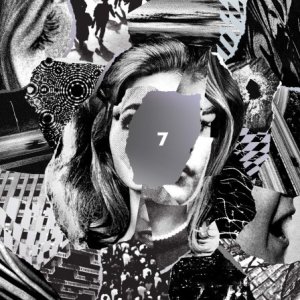 The first time we fall in love, the world feels uncomfortably bright. Everyday life takes on an oversaturated quality, as if the scenes playing out before us were flecked with magentas and blues that don’t quite belong, a vividness distilled into one person. Like a chemical high — which love is, of course — we momentarily drift into a consciousness that we can’t quite contain. It’s a dream performed with eyes wide open.
 The first time Joy Crookes laughs in the video for ‘Power’, it’s a disarming moment. The video, shot entirely in black and white, matches the song’s ele-gance in both purpose and style: classic yet modern, collective yet singular, softly spoken and sharp-tongued all at once. If that’s the case, it’s perhaps be-cause Crookes seeks to celebrate women, to exhibit joy, as much as denigrate those who seek to compromise their integrity. “You came here through a woman,” she sings. “Show some fucking respect.”
 Matthew Neale