The first thing you notice are the houses floating in the sky. Flashes of light rise up from the water, one after another, each one an impossible feat of geometry and space that rents the physical world asunder, unclear whether it should belong to the ocean or the stars. As the bus moves further into the city and your eyesight adjusts to unseen horizons, realisation dawns: the creases above the light do not cleave the sky from the clouds, but the mountains from the sky. In England, certainly, seaside towns are not usually distracted by mountains. If this sounds familiar, perhaps you have also seen Palermo for the first time on a late evening bus journey.
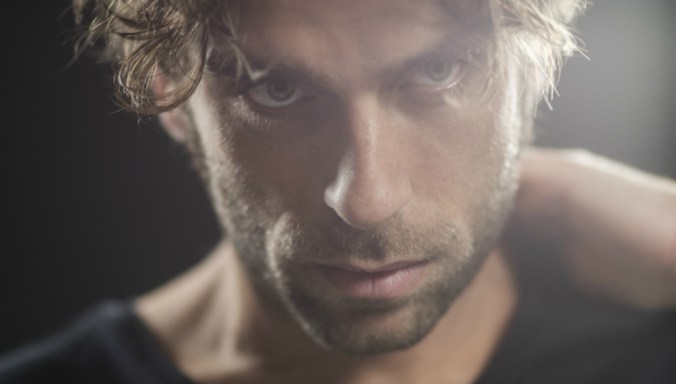
As I depart the bus and find my suitcase, a man is already stood waiting for me. Even by Sicilian standards, Fabrizio Cammarata is absurdly handsome, and although he confesses to several stories of having his heart broken across the weekend to follow, one suspects it has worked both ways. In Palermo, the eyes begin to adjust to beauty as they would to the dark; by the time we’ve reached the renovated 19th Century palace that I’d be calling home for the next two days, I fear that the slightly fancier Wetherspoons pubs of Exeter and Sheffield may no longer hold the same majesty.
Continue reading at Drowned in Sound
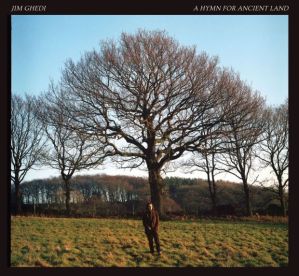 There are records that sing of the land, and those that wear traces of its soil beneath its author’s fingertips. Nature is a coarse thing, roughly marked by men and women who have known the abrasion of bark and nettle, skinned knees and chapped lips, seasons marked by sloe berries and the quick snap of frost. “In north-east Derbyshire,” Jim Ghedi begins at last, “I have worked my years.” Five songs in, they’re the first words spoken on A Hymn for Ancient Land, and the preceding tracks immediately feel less like instrumentals and more like their own wordless storytelling, the landscape rendered in strings and bows before anything as brittle as language is permitted to enter the fray.
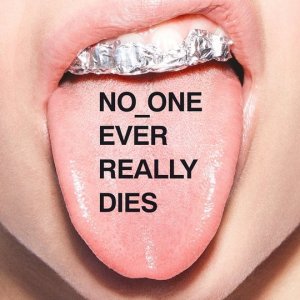 Regardless of whether anyone needed to hear this record, certainly no one needed to make it. It was famously documented in 2003 that, at one point, 43 percent of songs on U.S. radio (and 20 percent in the UK) were Neptunes-produced; the team of Pharrell Williams and Hugo Chavez were having to stagger releases, essentially to stop all their own songs competing against each other in the charts. With a hit-making machine already in place, the addition of Shae Haley to establish N.E.R.D. allowed Pharrell a playground for his more audacious off-cuts. On NO_ONE EVER REALLY DIES, their first output since 2010’s wildly inessential Nothing, the trio’s meandering avant-rap is somehow more encumbered by its lack of ideas than its lack of editorial savvy.
 From start to finish, the intersections of love and death that played out across the record (see: auto-erotic asphyxiation tribute “Die 4 You”) never felt cheapened by the gauzy nightdress they came swaddled in, but elevated by its vaudeville sexuality.
 Perhaps I’m reading too much into it – as writers, it is our job to stretch cogent narratives across increasingly cracked and disparate landscapes – but my top ten feels subdued this year. For the most part, these are albums defined by their restorative properties, where global anxieties are conveyed through sighs and whispers rather than shouts. It won’t stay that way for long.
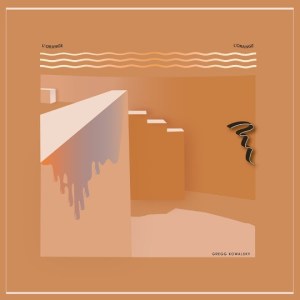 Like magical realism, the key signifiers of ambience are invariably opaque: as a genre, it thrives on ambiguity, haze, distortion, the ‘undecidable’, the inversion of assumed values. Light, where permitted, may only be dusky or twilit, carved out in anaemic shards of an otherwise pitch-black or cobalt totality. It may not be bright or, heaven forbid, sunny. It should not conjure Miami or California. Beyond all else, the ambient record denotes the absence of certainty, a precious world outside our own built from spiderwebs and choral loops. With L’Orange, L’Orange, Gregg Kowalsky compromises all our prose about misty forests and abandoned skyscrapers. It is incandescent.
 By the time the Manhattan duo had released their debut album, the continued existence of Cults already felt like a survival fight. While breakout hit and 2011 ubiquity
 The great marvel of the past is how malleable its shape becomes in the hands of both artists and revisionists, abrading the old guard, chipping away at stubborn monoliths until they give out, easy as sand through the fingers. Brooklyn’s own Widowspeak are riddled with ghosts, hovering between each breath, every reverb-soaked gesture. HBO’s stylish adaptation of Westworld provides several useful pointers, particularly for art that wears its former lives on its sleeves and especially for those who — on perhaps a cruder, more literal level — provide an artificial American frontier as the graveyard for their own hauntology.
 Matthew Neale