 By the time the Manhattan duo had released their debut album, the continued existence of Cults already felt like a survival fight. While breakout hit and 2011 ubiquity “Go Outside” gambolled through its four minutes with the insouciant, no-fucks breeziness of its contemporaries (Sleigh Bells‘ “Rill Rill”, Chairlift‘s “Bruises”), it also revealed glimpses of a heaviness that no glockenspiel could carry. Above all, they faced the dread fate of creating a cute hit: moving on from it. Now on their third album, Offering finds the band exploring the scope of their natural ballast with some of their darkest songs to date, while simultaneously sounding freer than ever; no longer one-hit wonders, theirs proves to be a robust kind of levity.
Continue reading at Drowned in Sound


 Mistress of the labyrinth, bride of Dionysus, goddess of mazes, paths, snakes, fertility, passion and wine, the legend of Ariadne is built on the twin pillars of ecstasy and uncertainty. Kedr Livanskiy, the musical alias of Moscow-based singer and producer Yana Kedrina, treads a similar path: her debut ‘Ariadna’ carries a thread that runs from the Romantic poets of the 1790s to the nascent electronic scene of 1990s Russia. Much like the Greek heroine, Kedrina’s ability to incorporate these strands into her music doesn’t prevent her from occasionally losing the way.
 The great marvel of the past is how malleable its shape becomes in the hands of both artists and revisionists, abrading the old guard, chipping away at stubborn monoliths until they give out, easy as sand through the fingers. Brooklyn’s own Widowspeak are riddled with ghosts, hovering between each breath, every reverb-soaked gesture. HBO’s stylish adaptation of Westworld provides several useful pointers, particularly for art that wears its former lives on its sleeves and especially for those who — on perhaps a cruder, more literal level — provide an artificial American frontier as the graveyard for their own hauntology.
 Reminiscing on the countless albums that have been signposted as eighties nostalgia, it’s striking how few of them actually sound like anything from that decade. Sure, the drums are loaded with gated reverb, the synth modules are preset to soft tones that were disowned in the nineties, fade-outs are a thing again, and the saxophone is suddenly an acceptable replacement for the electric guitar.
 As a young man growing up in Torquay, the neighbouring town of Totnes seemed like a strange kind of heaven. It was full of anarchists, hippies, socialists, crystal healers, vegans; I pilfered their book shops for esoteric publications by all of the above, picked up tomes by Terence McKenna, read the words of men pushing for an intersectional approach to psychedelics, the Abrahamic religions, and the alien civilisations who, I am led to believe, introduced both.
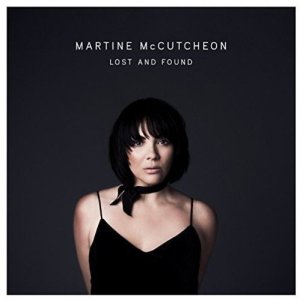 In a thousand years or so, maybe a hundred, none of this will matter. Once the nuclear tides have swept away an ocean of consumer perishables – discounted beyond belief for the greatest everything-must-go sale on earth – the balance between nature and artifice will pivot and arc back in favour of the soil, where the distinction between Olly Murs and Death Grips will be so much shattered plastic. In the meantime, Martine McCutcheon’s got a new album out, so perhaps we should assess that before we get ahead of ourselves. After all, civilisations don’t always get to choose which artefacts signal that they were once here; for all we know, ours could be Lost and Found and a cracked fidget spinner.
 In the seven years since Everything Everything hatched their jabbering debut Man Alive, a record that seemed destined to be filed alongside Fenech Soler and Ou Est Le Swimming Pool as curios of the period, a lot has changed. Its follow-up Arc put down a marker that they could do more than simply yelp and writhe, binding the band’s more staccato movements into something positively elegant. By the time we reached 2015’s Get to Heaven, the band were unstoppable; like an athlete at the apex of their game, their genius felt effortless, performatively cut through with cute feints and bravado. Returning with fourth album A Fever Dream, how could the Manchester four-piece possibly fail to score?
