 In the seven years since Everything Everything hatched their jabbering debut Man Alive, a record that seemed destined to be filed alongside Fenech Soler and Ou Est Le Swimming Pool as curios of the period, a lot has changed. Its follow-up Arc put down a marker that they could do more than simply yelp and writhe, binding the band’s more staccato movements into something positively elegant. By the time we reached 2015’s Get to Heaven, the band were unstoppable; like an athlete at the apex of their game, their genius felt effortless, performatively cut through with cute feints and bravado. Returning with fourth album A Fever Dream, how could the Manchester four-piece possibly fail to score?
Continue reading at Drunken Werewolf
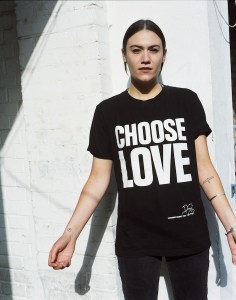 Nadine Shah is texting me from a Wetherspoons. ‘I’m gonna duck out of this shithole and call you in 6mins. That ok?’ Half an hour later, we’re wrapping up with a discussion of their gin palace. (She’s got a double waiting inside.) Somewhere in between, we cover the Syrian refugee crisis, British nationalism, the current Tory government, immigration, gender, and revolution.
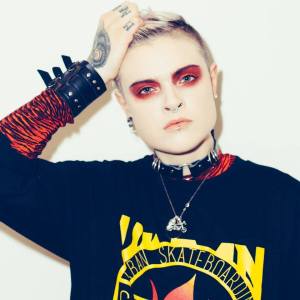 Lord, it’s dark out. Hot, wretched evenings punctuated by the rattling of teeth and the burning of tiki torches. More than ever, the world needs heroes who have learned to navigate the night by nothing but matches and a clear voice. Esther Joy is no stranger to the darkness, but my word, her songs are incandescent.
 As our march toward the world’s end builds to a canter, the narratives we wrap around human tragedies both great and small remain the same: resurrection, hope not hate, the phoenix rising from the ashes. After Eagles of Death Metal survived the terrorist attack that interrupted their 2015 Bataclan show in Paris, the appropriate responses began flooding in, spearheaded by (a) a collection of largely ersatz covers of ‘I Love You All The Time’, and (b) the usual well-meaning platitudes about hope and fear. Frontman Jesse Hughes didn’t get the memo. ‘I know people will disagree with me,’ he told The Guardian a few months later, ‘but it just seems like God made men and women, and that night guns made them equal.’ Suddenly, it appeared the protagonists had their own complex moral code, one that didn’t necessarily fit with the scripted liberal response. The phoenix proved as unmanageable as the ashes.
 The vocabulary of post-punk is one that shifts, but never bends. Its album reviews – certainly this side of ‘Silent Alarm’ – are littered with the kind of abrasive descriptors that suggest the album may also function as a rudimentary bandsaw: jagged, angular, serrated, combined with a mitre fence for accurate repetitive cuts. Thank heavens for Mammút then, whose fourth album ‘Kinder Versions’ is equally arch at its edges and swollen with unkempt joy in the middle.
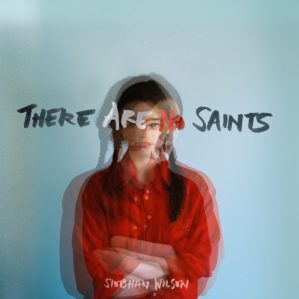 We’re all chancing along the precipice, of course. The gentlest of pressure applied to the glued-up, duct-taped seams of the responsible world finds the whole thing bursting apart, and with it our job titles, rictus grins, marriage vows, sobriety chips, management buzzwords. On her second album There Are No Saints, Siobhan Wilson identifies herself as “neither Cathy nor Anna Karenina,” but perhaps an interlocutor between the two: pulling at the scuzzy fabric and binding it into something both prettier and more substantial.
 There’s a pivotal scene that closes out the first season of Spaced, the cult TV debut of Simon Pegg, Nick Frost, and director Edgar Wright, in which Tim has an epiphany waiting for his ex-girlfriend to arrive at the bar. “It’s like walking in on yourself, you know? Like, ‘What are you doing?’ That’s how I felt tonight feeling my heart miss a beat every time the door opened. ‘What the fuck are you doing?’” On her fourth album as Waxahatchee, Out in the Storm, Katie Crutchfield’s natural introspection transcends navel-gazing to place distance between herself and a toxic relationship, and the effect is both vituperative and life-affirming: in its most brutally honest scenes, we catch the Alabama native walking in on herself.

 Matthew Neale