
The world is a sharp place, and art that serves only to map out its painful edges proves as useful and welcome as Owen Smith’s post-election hubris, or chlamydia, or waking up and realising that Owen Smith’s post-election hubris has somehow given you chlamydia. The scenes that leave a real scar are those that locate the intersection of tragedy and farce; the ragged contours, the poignant moments Simon Reynolds once described as “the exquisite meshing of two contradictory feelings”. It’s driven by characters who compromise the expectations attached to their role, and by proxy, the way we identify ourselves within them. The world’s villains are still easy enough to caricature. But if you happen to fall outside the heteronormative matrix, chances are the heroes don’t look anything like you either.
Continue reading at Drowned in Sound
 ‘All I wanted comes in colours,’ Victoria Legrand once sang, and while it’s tempting to mark that as a collection of euphonically pleasing words rather than a mission statement, there’s an element of both. Perhaps I’ve read too much into Beach House’s artwork over the years, but all those records seem to hold together as cohesive shades from start to finish: the woozy amber of the first two releases;
  Capacity is a record of the first morning light, dusted with snow and blood. “There is a darker darkness and a lighter light on this album,” Adrianne Lenker explains, and while nothing could be truer than this, they are not separate: every pristine landscape bears the mark of the prior night’s reds and blacks, and even the darkest nighttimes are shot through with the hot, white clarity of a hangover returning a borrowed memory. “The sugar rush, the constant hush,” Lenker gasps on ‘Mary’, and Big Thief’s second album somehow captures both at once.
 In the music video for
  Did it occur to you to stop for a moment and think about what all this might be doing to the kids? Do you even know where you left them? Like a beleaguered prime minister, we’ve abandoned them in the pub, forced to make their own way between the fruit machines and the soothing baritone of Jeff Stelling. And guess what? They know all about Article 50, and the attempted repeal of the Affordable Care Act, and now they’re drinking, smoking, reading Dick Hebdige, and having sex in the back of trucks with boys who share their first name. On Swear I’m Good At This, upstate New York duo Diet Cig have effortlessly captured the zeitgeist in half an hour of adrenaline-fuelled power pop, bottling a lightning I’d forgotten could still strike.
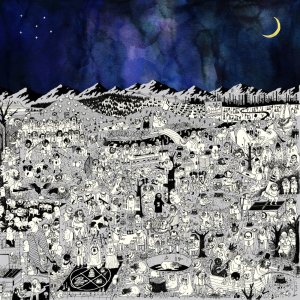 You don’t need me to tell you this, but I’ll say it anyway: Father John Misty is kind of a dick. He fancies himself a loveable provocateur on Pure Comedy, singing about having sex with Taylor Swift on live TV and then recoiling in horror at the suggestion that it might have been, you know, a little provocative. He was supposedly tripping on acid during that performance, as he was for his
  Say what you like about British Sea Power, you can’t fault their industry. Since their last studio album, 2013’s lukewarm Machineries of Joy, the band have kept busy with various suitably charming projects: soundtracking a 2014 documentary film about the globalisation of Bhutan; refashioning their back catalogue for perhaps the third time on
 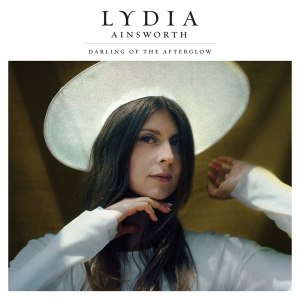 Shooting night scenes like a police photographer, Lydia Ainsworth works in the palette that she knows best: pitch black, pallor white, autopsy violet. It was scoring her friend Matthew Lessner’s 2011 film The Woods, nominally about “hipsters who move to the woods to start a utopian society,” that the NYU and McGill University student was asked to sing over her dark creations; following years immersed in atonal classical experiments, the possibility that she could be one of the pop stars she adored as a child held an appealing possibility. Better yet, as a classically trained cellist who once composed a Philip Glass-inspired score for a 50-piece orchestra, she was uniquely placed to merge both worlds. On Darling of the Afterglow, Ainsworth’s second album, one of those worlds has begun to fade from her work.
 For the great pessimist Schopenhauer, the will to life was an aberration, a balled fist from humanity’s lowest reach that existed to be overcome. Society was a futile project, he argued, because our baser instincts would always win. “Will to Life”, the second track from Tall Ships’ long-awaited second album Impressions, does not endorse this view, though frontman Ric Phethean does namecheck the German philosopher in the press release. “It’s about battling the darkness and sadness we feel throughout our lives through companionship,” he explains, and the extent to which you consider this statement profound insight or bland pontification will likely inform your enjoyment of the record.
 Matthew Neale