
Each time I return from Budapest, through no fault but my own, the bright corridors of Bristol or Amsterdam Schiphol alert me to an unscheduled lightness; I have left something behind. Invariably it’s an assortment of the same items: keys, wallet, heart, cash, sense of direction, preconceived notions of both popular and alternative music as an exclusively Anglophonic affair that extends as far as Scandinavia before offering diminishing returns as soon as one ventures further south or east. Upon my visit to Budapest Showcase Hub (or BUSH) 2017, the extraordinary sophomore to last year’s debut event, I am pleased to report that I am now only bereft of the final four items on that list.
Continue reading at Clash

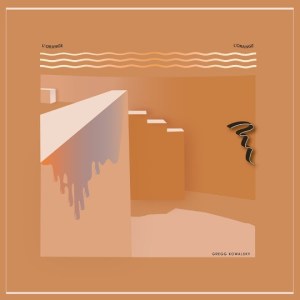 Like magical realism, the key signifiers of ambience are invariably opaque: as a genre, it thrives on ambiguity, haze, distortion, the ‘undecidable’, the inversion of assumed values. Light, where permitted, may only be dusky or twilit, carved out in anaemic shards of an otherwise pitch-black or cobalt totality. It may not be bright or, heaven forbid, sunny. It should not conjure Miami or California. Beyond all else, the ambient record denotes the absence of certainty, a precious world outside our own built from spiderwebs and choral loops. With L’Orange, L’Orange, Gregg Kowalsky compromises all our prose about misty forests and abandoned skyscrapers. It is incandescent.
 Matthew Neale